
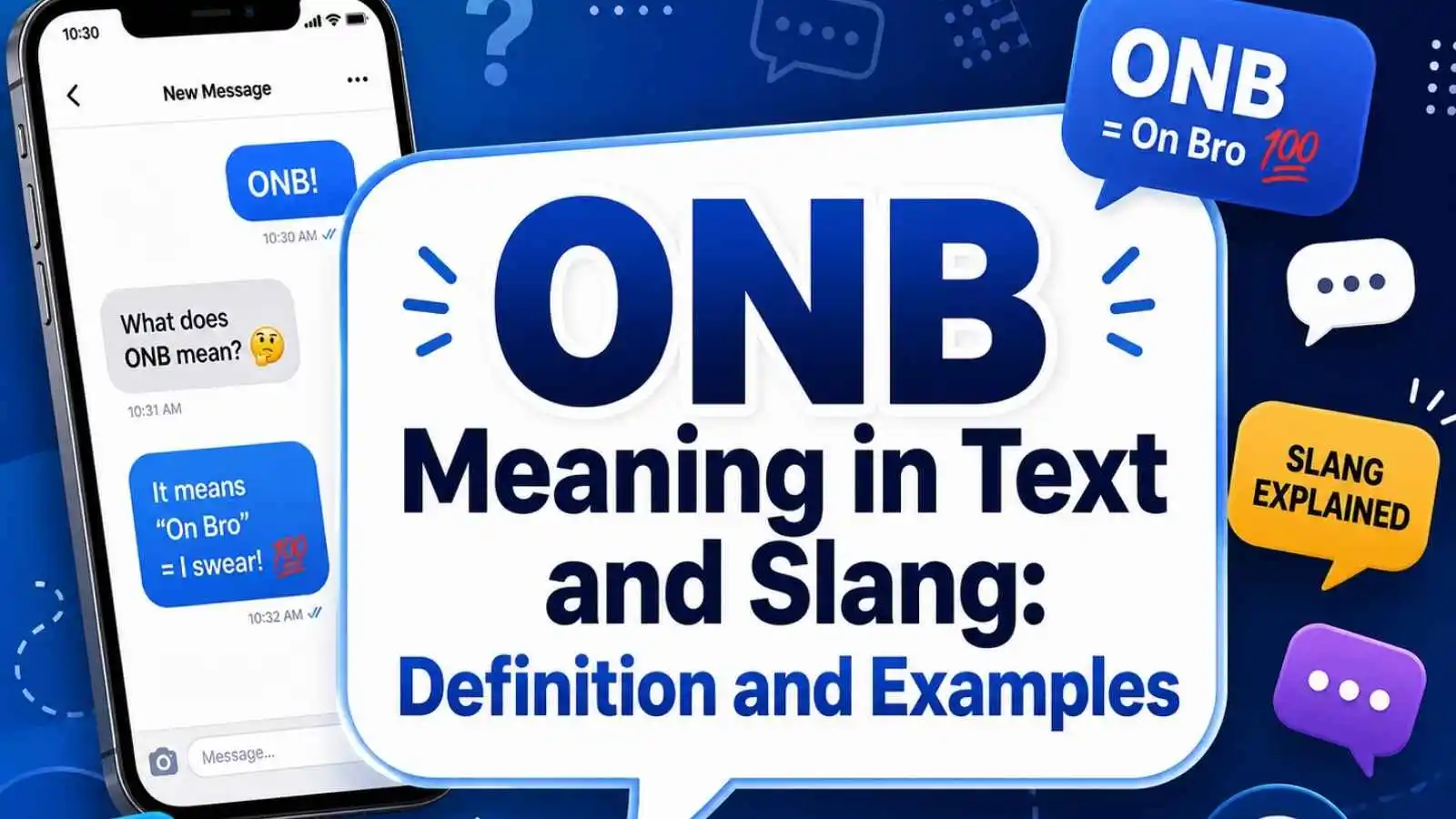
You may see ONB in a text, Snapchat message, TikTok comment, or Instagram DM. It is short, casual, and easy to miss.
The term matters because it changes the tone of a message. A person may use it to sound honest, serious, loyal, or dramatic.
This guide explains what ONB means and how people use it. You will also see examples, common mistakes, related slang, and a short quiz.
Quick Answer
ONB Meaning usually refers to “On Bro.” It means “I swear,” “I’m serious,” or “I’m telling the truth.”
It is casual slang. Use it with friends, not in formal writing.
TL;DR
• ONB usually means “On Bro.”
• It shows honesty or serious tone.
• It is casual text slang.
• Use it with friends.
• Context decides the exact meaning.
What ONB Means in Plain English
ONB is a short way to add force to a statement. It tells the other person, “Believe me.”
In plain English, ONB can mean:
• “I swear.”
• “I promise.”
• “I’m serious.”
• “For real.”
Example: “I didn’t take your charger, ONB.”
That means the person strongly says they did not take it.
ONB Meaning in Text and Slang
In texting, ONB most often stands for “On Bro.” It works like a casual oath.
People use it when they want to sound honest or intense. It can also show strong agreement.
Examples:
• “ONB, that test was hard.”
• “I saw her at the game, ONB.”
• “That food was amazing, ONB.”
In slang, tone matters a lot. ONB usually adds truth, trust, or emotion.
Pronunciation, Capitalization, and Part of Speech
Most people read ONB as three letters: “O-N-B.” In speech, some say the full phrase, “on bro.”
ONB is usually written in all caps. Lowercase “onb” may appear in quick texts.
Part of speech: ONB works as a slang abbreviation or phrase. It is not a formal noun, verb, adjective, or adverb.
It usually appears at the start or end of a sentence.
Examples:
• “ONB, I’m not lying.”
• “That was the best burger, ONB.”
How to Use ONB Naturally
Use ONB when you want to stress honesty or emotion. It should sound casual, not polished.
Good uses:
• “ONB, I studied all night.”
• “I’m not mad, ONB.”
• “That concert was crazy, ONB.”
A natural reply can be simple:
• “For real?”
• “No way.”
• “I believe you.”
• “That’s wild.”
Do not use ONB in every sentence. Too much slang can sound forced.
When to Use ONB and When Not to Use It
ONB fits best in relaxed chats. It works when both people understand modern slang.
| Context | Best Choice | Why |
| Texting a close friend | ONB | Casual and natural |
| School group chat | Maybe ONB | Depends on the group |
| Email to a teacher | “I promise” | Clear and respectful |
| Work message | “I’m serious” | More professional |
| Formal writing | Avoid ONB | Too informal |
Use ONB when the tone is friendly. Avoid it when clarity matters most.
Common Contexts and Examples
ONB appears most often in fast, informal places. These include texts, DMs, captions, comments, and group chats.
On Snapchat:
• “I didn’t screenshot it, ONB.”
On TikTok:
• “ONB this is the funniest comment here.”
On Instagram:
• “That outfit is clean, ONB.”
In regular texting:
• “I’ll pay you back Friday, ONB.”
The same letters can mean different things. Always read the full message first.
Related Terms and Common Confusions
ONB is close to other slang that adds truth or emphasis. These terms are related, but not identical.
Related terms:
• ONG means “on God.”
• No cap means “no lie.”
• Fr means “for real.”
• I swear is the plain-English version.
ONB can also mean other things in some places. These include “Outward Nose Breath,” “Old News, Bro,” and “On Blood.”
Those meanings depend on context. In most casual texts, “On Bro” is the safest first reading.
Synonyms and Antonyms
ONB does not have perfect synonyms. Still, several phrases can carry a close meaning.
Close synonyms:
• “I swear” — direct and clear
• “For real” — casual and common
• “No lie” — casual and strong
• “Trust me” — direct and friendly
• “I promise” — clear and serious
Possible antonyms depend on context. Since ONB claims truth, the opposite idea is lying or joking.
Useful opposite phrases:
• “I’m kidding.”
• “Just playing.”
• “That’s fake.”
• “I’m lying.”
Do not treat these as exact antonyms. They only work in certain messages.
Common Mistakes
One mistake is using ONB in formal writing. It does not belong in essays, job emails, or business notes.
Weak: “ONB, I completed the report.”
Better: “I completed the report.”
Another mistake is assuming ONB always has one meaning. It usually means “On Bro,” but context still matters.
Weak: “ONB always means one thing.”
Better: “ONB usually means ‘On Bro’ in casual texts.”
A third mistake is using it with people who may not know slang. That can make your message unclear.
FAQs
What does ONB mean in text?
ONB usually means “On Bro.” It is used like “I swear” or “I’m serious.”
It adds honesty or strong feeling to a message.
What does ONB mean in slang?
In slang, ONB is a casual way to stress truth. It can also show strong agreement.
It is informal and common in online chats.
What does ONB mean on Snapchat?
On Snapchat, ONB usually means “On Bro.” It may appear in chats, stories, or captions.
Example: “I didn’t save it, ONB.”
What does ONB mean on TikTok?
On TikTok, ONB often means “On Bro.” It can also appear as a reaction in comments.
Some users may use it for “Outward Nose Breath.” Context helps you decide.
Is ONB the same as ONG?
No, but they are close. ONB means “On Bro,” while ONG means “On God.”
Both can stress truth, promise, or strong emotion.
Is ONB rude?
ONB is not always rude. It is casual and can sound intense.
It may feel too informal in serious settings.
Can adults use ONB?
Adults can use it in casual chats. It should fit the person, setting, and relationship.
In formal messages, use plain words instead.
Mini Quiz and Conclusion
Mini Quiz
- What does ONB usually mean?
- Is ONB formal or informal?
- Choose the better work message: “ONB, I sent it” or “I sent it.”
- What phrase is close in meaning to ONB?
- Should you always read the full context first?
Answer Key
- “On Bro.”
- Informal.
- “I sent it.”
- “I swear,” “for real,” or “no lie.”
- Yes.
Conclusion
ONB Meaning is simple once you know the context. It usually means “On Bro,” a casual way to say you are serious.
Use it with friends, texts, and relaxed chats. Choose clearer words when the setting is formal.
