
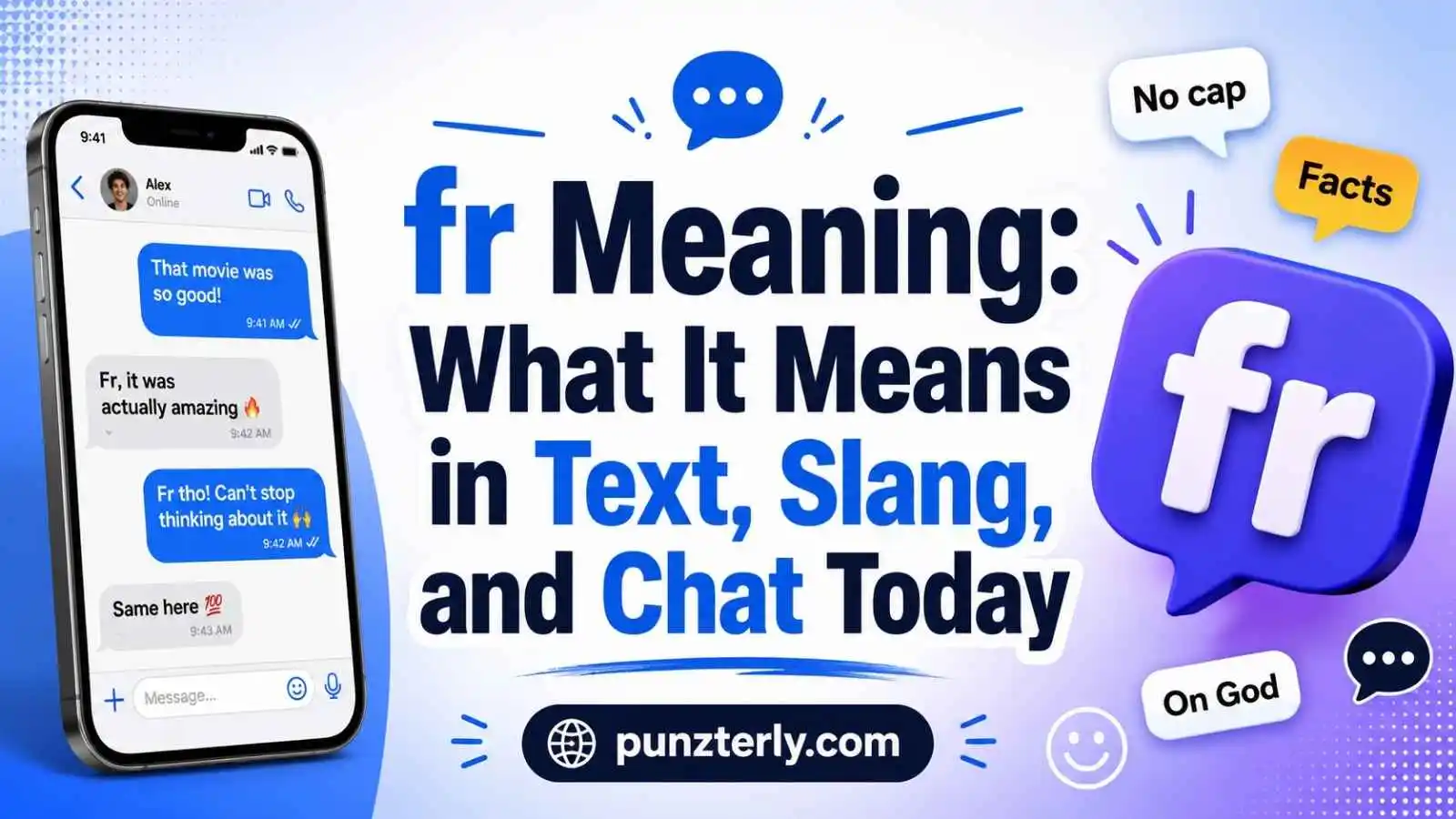
You may see fr in texts, comments, DMs, and group chats. It is common on TikTok, Snapchat, Instagram, and casual message threads.
The term is short, but its tone can change. It can mean agreement, surprise, honesty, or a serious reaction.
That is why fr meaning is a helpful search. Once you know the context, the message becomes much easier to understand.
This guide explains what fr means in English, how people use it, and when it sounds too casual. You will also learn how to reply to it naturally.
Quick Answer
fr meaning is “for real.” It is a casual slang abbreviation used to mean “seriously,” “I agree,” or “that is true.”
It works best in texts, chats, and social posts.
TL;DR
• fr means “for real.”
• It is casual texting slang.
• It can show agreement.
• It can show surprise.
• frfr is stronger.
• Avoid it in formal writing.
What “fr” Means in English
In English, fr usually means “for real.” The phrase means something is true, serious, genuine, or not a joke.
People use fr when they want to agree quickly. They also use it when they want to sound honest.
Examples:
• “That test was hard fr.”
Meaning: That test was really hard.
• “fr, I needed that break.”
Meaning: Seriously, I needed that break.
• “You got tickets?”
“fr?”
Meaning: Are you serious?
The question mark matters. fr can mean agreement, but fr? asks if something is true.
Is “fr” Slang?
Yes, fr is slang in most text and chat use. It is informal and best for casual conversations.
You can use it with friends, classmates, siblings, or close coworkers. It may sound too relaxed in serious messages.
Use fr when the tone is friendly and quick. Avoid it when the message needs a polished style.
Better casual use:
• “That pizza was amazing fr.”
Better formal use:
• “That pizza was truly excellent.”
Both mean something similar. The tone is different.
Pronunciation, Spelling, and Part of Speech
Most people read fr as the letters “F-R.” In speech, they usually say the full phrase “for real.”
The spelling is often lowercase in texts. You may also see FR, especially in comments or short replies.
As a part of speech, fr is a slang abbreviation. It is not usually a noun, verb, adjective, or adverb by itself.
It works like a short response:
• “This line is so long.”
• “fr.”
It can also work like an emphasis tag:
• “I’m tired fr.”
In formal writing, Fr. is different. It can mean “Father” before a priest’s name, as in “Fr. Thomas.”
How to Use “fr”
Use fr when you want to sound casual and direct. It can do three main jobs.
• Show agreement
“School started too early.”
“fr.”
• Show honesty
“I really think you should apply fr.”
• Ask for confirmation
“You met her today?”
“fr?”
You can place fr at the start, middle, or end of a casual sentence.
Examples:
• “fr, that was the best episode.”
• “That was fr the best episode.”
• “That was the best episode fr.”
The end position is very common in chats. It feels quick and natural.
Common Contexts, Examples, and Replies
You will see fr in fast, casual places. It works well when people react in short messages.
Common places include:
• text messages
• Snapchat replies
• TikTok comments
• Instagram comments
• group chats
• gaming chats
Here are common meanings by context:
| Context | Best Choice | Why |
| Friend agrees with you | “fr” | It means “true” or “I agree.” |
| Someone asks “fr?” | “Yes, seriously.” | They want confirmation. |
| A formal email | “seriously” | It sounds clearer and more polished. |
| A social comment | “fr” | The tone is casual and quick. |
Natural replies:
• “fr” → “Right?”
• “fr?” → “Yes, I’m serious.”
• “fr fr” → “Exactly.”
• “That was wild fr” → “It really was.”
A good reply depends on the punctuation. fr? is a question. fr is usually agreement.
When Not to Use “fr”
Do not use fr when the setting is formal. It can look too casual or unclear.
Avoid it in:
• school essays
• job applications
• business emails
• legal documents
• messages to people you barely know
Instead, use clearer words.
Casual:
• “I’m serious fr.”
More polished:
• “I am serious.”
Casual:
• “That plan could work fr.”
More polished:
• “That plan could truly work.”
Slang is not wrong. It just needs the right setting.
Where “fr” Comes From
fr comes from the phrase “for real.” People shortened it because texting often favors quick wording.
The deeper history is not fully clear. The phrase “for real” has been used in spoken English for a long time.
In online chat, fr became a fast way to show truth, agreement, or surprise. It fits short messages well.
Some sources connect “for real” and related uses with African American English. It is safest to say the modern text form spread through online conversation.
Related Terms, Synonyms, and Antonyms
The closest full phrase for fr is for real. In many messages, it means “seriously” or “I agree.”
Related terms:
• frfr: “for real, for real,” with stronger emphasis
• for real: the full phrase
• seriously: a clearer standard word
• no cap: slang for “no lie”
• true: simple agreement
• same: casual shared feeling
Close synonyms:
• seriously
• truly
• honestly
• really
• genuinely
• for sure
These are not perfect in every sentence. Pick the word that matches the tone.
Useful antonyms for the idea behind fr include:
• fake
• false
• joking
• not serious
• untrue
There is no exact antonym for the abbreviation itself. The opposite depends on the sentence.
Common Mistakes
One common mistake is using fr in formal writing. It may confuse readers who expect standard English.
Weak:
• “I am interested in this role fr.”
Better:
• “I am genuinely interested in this role.”
Another mistake is missing the question mark. fr and fr? do not feel the same.
• “fr” means “I agree” or “seriously.”
• “fr?” means “Are you serious?”
A third mistake is confusing fr with Fr. The period and capital letter can change the meaning.
• fr = for real
• Fr. James = Father James
• Fr. may also appear in other formal abbreviations
Context tells you which meaning is right.
Mini Quiz
Test your understanding.
- What does fr usually mean?
- What does fr? ask?
- Is fr formal or informal?
- What does frfr mean?
- What should you write in a formal email instead?
Answer key:
- For real.
- Are you serious?
- Informal.
- For real, for real.
- Seriously, truly, or genuinely.
FAQs
What does fr mean in text?
fr means “for real” in text. It can mean “seriously,” “that is true,” or “I agree.”
It is casual and common in short messages.
What does fr mean in slang?
In slang, fr is a quick way to show honesty or agreement. It can also show surprise.
For example, “fr?” means “Are you serious?”
What does fr mean on Snapchat or Instagram?
On Snapchat or Instagram, fr usually means “for real.” People use it in replies, captions, and comments.
It often works like “true,” “same,” or “seriously.”
What does frfr mean?
frfr means “for real, for real.” It is stronger than fr.
People use it when they strongly agree or want to sound very serious.
What does fr mean from a girl or guy?
The meaning is usually the same. fr still means “for real.”
The sender’s gender does not change the meaning. The context and tone matter more.
Is fr rude?
fr is not rude by itself. It is usually casual and friendly.
It may sound blunt if the conversation is serious. Use full words when tone matters.
Can I use fr in school or work?
You can use fr in casual school or work chats. Avoid it in essays, reports, and formal emails.
Use “seriously,” “truly,” or “genuinely” instead.
Conclusion:
fr meaning is simple once you know the context. In most texts, fr means “for real.”
Use it in casual chats, not formal writing. When in doubt, choose the full phrase.
