
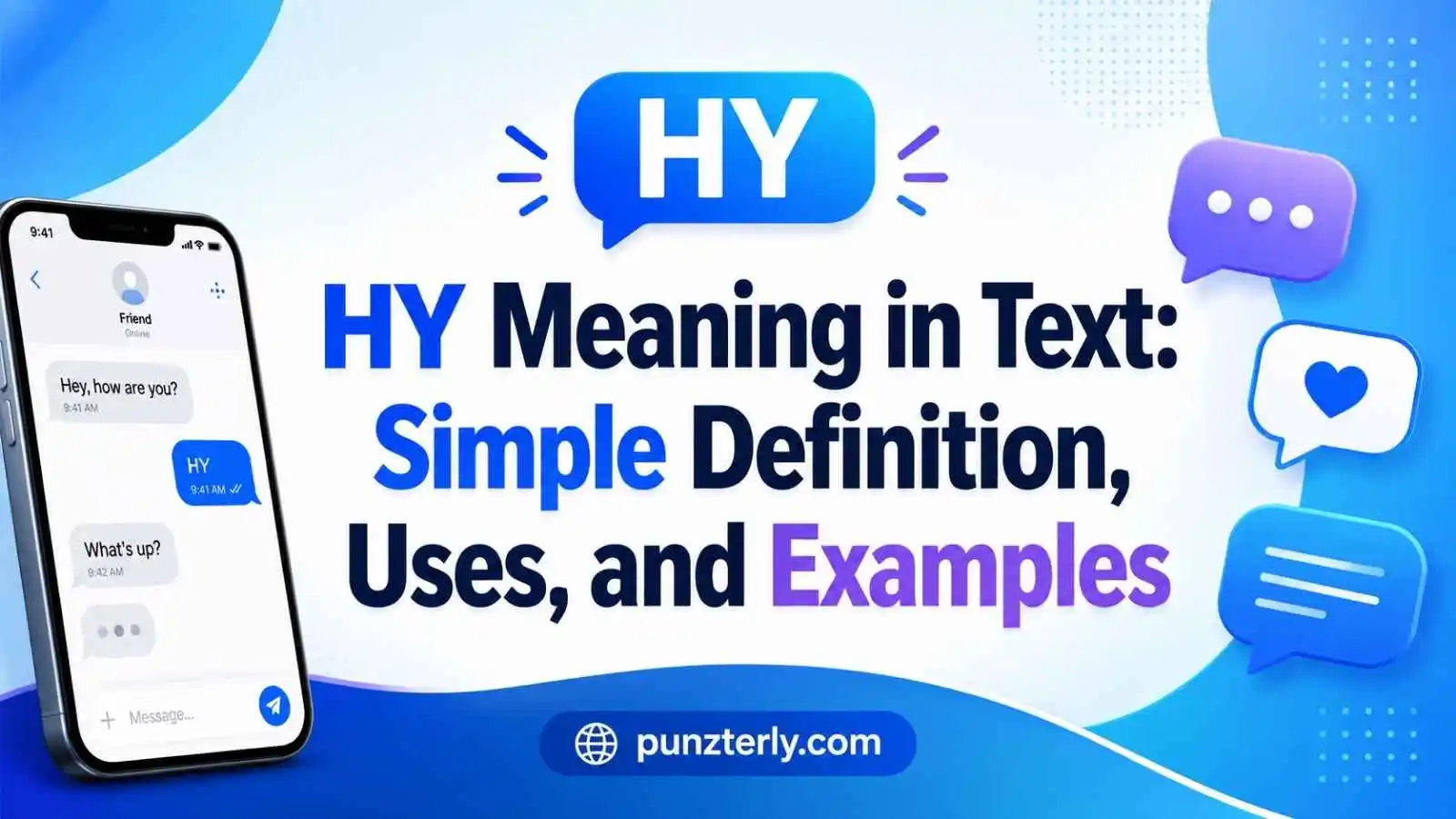
You may see HY in text messages, DMs, comments, or social media replies. It is short, casual, and easy to misunderstand.
In many chats, HY means “hell yeah” or “hell yes.” It shows strong agreement, excitement, or approval. In other messages, it can work like “hey,” “hi,” or “hey you.”
That difference matters because the same two letters can carry different tones. A reply like “HY!” feels excited. A first message like “hy, what’s up?” feels more like a greeting.
This guide explains the meaning, uses, examples, tone, pronunciation, and common mistakes. It also shows when HY fits and when it sounds too casual.
Quick Answer
Hy meaning in text is usually “hell yeah” or “hell yes.” It can also mean “hey,” “hi,” or “hey you” when it starts a message.
TL;DR
• HY often means “hell yeah.”
• It can also mean “hey” or “hi.”
• Context decides the meaning.
• Use it in casual chats only.
• Avoid it in formal messages.
• HY is usually upbeat and informal.
What HY Means in Text
HY is a short texting abbreviation. Most often, it is used as a quick way to say “hell yeah” or “hell yes.”
That meaning shows strong agreement. It is more excited than a plain “yes.”
Example:
Friend: “Want to grab tacos after class?”
You: “HY, I’m starving.”
In some chats, HY also means “hey” or “hi.” This happens more often when it appears at the start of a message.
Example:
“Hy, are you still coming tonight?”
Here, HY works as a casual greeting.
Definition in Plain English
HY means a quick, informal yes with energy. It can also mean a short hello.
The meaning depends on the message around it. A reply usually means agreement. An opening message usually means a greeting.
Plain definition:
HY is a casual text abbreviation used to show excited agreement or to greet someone.
It is not a formal word. It belongs in friendly chats, DMs, captions, comments, and group messages.
HY as “Hell Yeah” or “Hell Yes”
This is the strongest meaning of HY in many text conversations. It shows that someone is excited, interested, or fully agrees.
It often appears after a question, plan, or good news.
Examples:
• “Movie tonight?”
“HY, let’s go.”
• “I got the job!”
“HY! That’s amazing.”
• “This song is so good.”
“HY, I’ve had it on repeat.”
This use feels upbeat and supportive. It is stronger than “yes,” “yeah,” or “sure.”
Because it includes mild language, it may not fit every setting. “Heck yeah” is the softer version.
HY as “Hey,” “Hi,” or “Hey You”
HY can also act like a greeting. In this use, it is close to “hi,” “hey,” or “hey you.”
You can spot this meaning when HY starts the message.
Examples:
• “Hy, what are you doing?”
• “HY, long time no talk.”
• “hy bestie, call me later.”
This meaning can feel friendly, playful, or slightly flirty. The tone depends on the person and the rest of the message.
Do not assume it is romantic by itself. A simple “hy” may just mean the person is starting a chat.
How to Tell the Meaning from Context
Context is the easiest way to understand HY. Look at where it appears in the message.
| Context | Best Choice | Why |
| Reply to a plan | “Hell yeah” | It shows excited agreement. |
| Start of a message | “Hey” or “hi” | It opens the conversation. |
| Comment under good news | “Hell yeah” | It shows support. |
| Message with a wink emoji | “Hey you” | It may sound playful. |
| Work or school message | Avoid HY | It may sound too casual. |
Punctuation also helps. “HY!” usually feels excited. “hy” at the start often feels like a quick hello.
Emojis can change the tone too. A smiley may feel friendly. A wink may feel playful.
Part of Speech and Pronunciation
HY is best understood as a texting abbreviation. It can work like an interjection because it expresses a quick feeling.
As “hell yeah,” it acts like an excited reply.
Example:
“HY! I’m ready.”
As “hey” or “hi,” it acts like a greeting.
Example:
“Hy, are you free?”
Pronunciation is simple. In real speech, people usually say the full phrase, like “hell yeah” or “hey.”
If reading the letters aloud, say “H-Y.” That sounds like “aitch why.”
When to Use HY
Use HY when the conversation is casual. It works best with friends, classmates, siblings, close coworkers, or online mutuals.
Good places to use HY include:
• Text messages with friends
• DMs on social apps
• Group chats
• Casual comments
• Fun replies to plans or good news
Use HY when you want to sound excited and relaxed.
Examples:
• “HY, I’m down.”
• “HY, that looks fun.”
• “HY! Congrats!”
It can make your reply feel warmer than a plain “yes.”
When Not to Use HY
Avoid HY in formal or serious messages. It can sound too casual, unclear, or immature.
Do not use HY in:
• Work emails
• Job applications
• Messages to a teacher
• Formal school writing
• Serious apologies
• Sensitive conversations
Weak choice:
“HY, I can attend the interview.”
Better choice:
“Yes, I can attend the interview.”
Also avoid HY with people who may not know texting slang. A clear word is better than a confusing abbreviation.
Examples and Smart Replies
The best reply depends on what HY means in the message.
If HY means “hell yeah,” you can match the energy.
Examples:
Friend: “Want to go hiking Saturday?”
You: “HY, that sounds perfect.”
Friend: “We finally passed the test.”
You: “HY! We needed that.”
Friend: “This team is winning tonight.”
You: “HY, I believe it.”
If HY means “hey” or “hi,” answer like a normal greeting.
Examples:
Friend: “hy, what’s up?”
You: “Hey! Not much. What about you?”
Friend: “HY, you busy?”
You: “A little, but I can text.”
Friend: “hy 😊”
You: “Hey! How’s your day?”
Keep your reply natural. You do not need to overthink it.
Related Terms, Common Mistakes, and Mini Quiz
HY is close to other short text terms. Some look similar but mean different things.
Related terms:
• Yeah means yes in an informal way.
• Hell yeah means a strong, excited yes.
• Heck yeah is a cleaner version.
• Hey is a casual greeting.
• HYD often means “how you doing?”
• HYU often means “hit you up.”
Common mistake:
Mistake: Thinking HY always means one thing.
Correction: Read the full message first.
Mistake: Using HY in a formal message.
Correction: Use “yes,” “hello,” or a complete sentence.
Mistake: Confusing HY with HYD.
Correction: HY is usually “hell yeah” or “hey.” HYD asks how someone is doing.
Synonyms for HY as “hell yeah” include:
• absolutely
• definitely
• for sure
• heck yeah
• totally
Antonyms only fit the agreement meaning. Good opposites include:
• no
• nope
• not really
• hell no
Mini Quiz:
- What does HY usually mean after a plan?
- What does HY likely mean at the start of a message?
- Is HY formal or informal?
- Which is safer at work: “HY” or “Yes”?
- What is a softer version of “hell yeah”?
Answer Key:
- Hell yeah or hell yes.
- Hey, hi, or hey you.
- Informal.
- Yes.
- Heck yeah.
FAQs
What does HY mean in a text message?
HY usually means “hell yeah” or “hell yes.” It shows strong agreement, excitement, or approval. It can also mean “hey” or “hi” at the start of a message.
What is the full form of HY?
The most common full form is “hell yeah” or “hell yes.” In some chats, it can also stand for “hey you.” The message context tells you which one fits.
Does HY mean “hey” or “hell yeah”?
It can mean either one. If it replies to a plan or question, it likely means “hell yeah.” If it starts a message, it likely means “hey.”
What does HY mean on Snapchat?
On Snapchat, HY often means “hell yeah.” It can be a quick reaction to a snap, plan, or exciting message. It may also work as a casual greeting in a chat.
What does HY mean from a guy?
It does not have a special meaning only from a guy. It may mean “hey,” “hey you,” or “hell yeah.” Look at the tone, timing, and message around it.
What does HY mean from a girl?
It means the same thing from a girl. It may be a greeting or an excited yes. Do not assume it is flirty unless the rest of the message supports that tone.
Can I use HY in professional messages?
No, it is better to avoid HY in professional messages. Use “yes,” “hello,” or a complete sentence instead. Clear wording sounds more respectful.
Conclusion
Hy meaning in text usually points to “hell yeah,” “hell yes,” or a quick “hey.”
The safest way to read it is by checking context. Use it with friends, but choose clearer words in formal writing.
